Brazil is the farthest country from Japan. Although there is a Japanese community, I have never tried their food in my life. Hence, it is a good opportunity to cook their popular dishes called feijoada and farofa.
INGREDIENTS
Feijoada
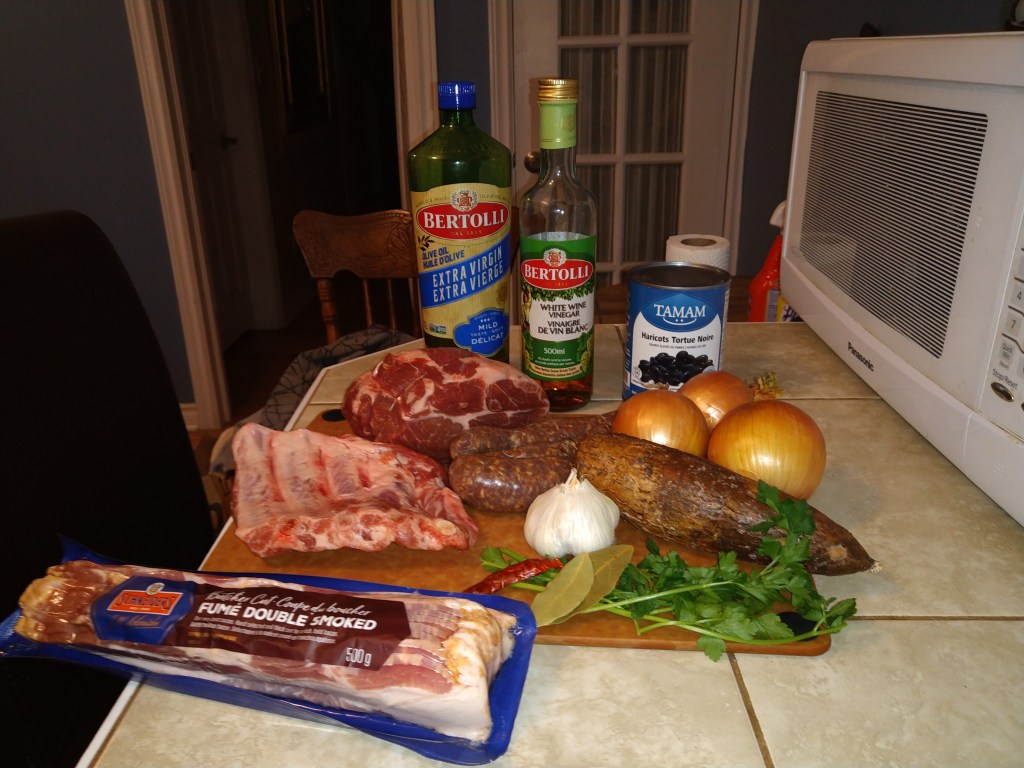
Preparation time: 15 minutes Servings: 4 servings
Cooking time: 2 hours 30 minutes
| Quantity | Unit of measure | Ingredient/specification |
| 500 | g | Black beans |
| 100 | g | Smoked bacon, lardons |
| 500 | g | Pork ribs |
| 3 | pc | Chorizo |
| 500 | g | Pork shoulder, 5cm cubes |
| 3 | pc | Onion, medium dice |
| 4 | cloves | Garlic, minced |
| 2 | pc | Bay leaves |
| 2 | tbsp | White wine vinegar |
| 1 | tbsp | Chilli flakes |
Preparation
- Heat a stockpot and cook bacon to golden brown
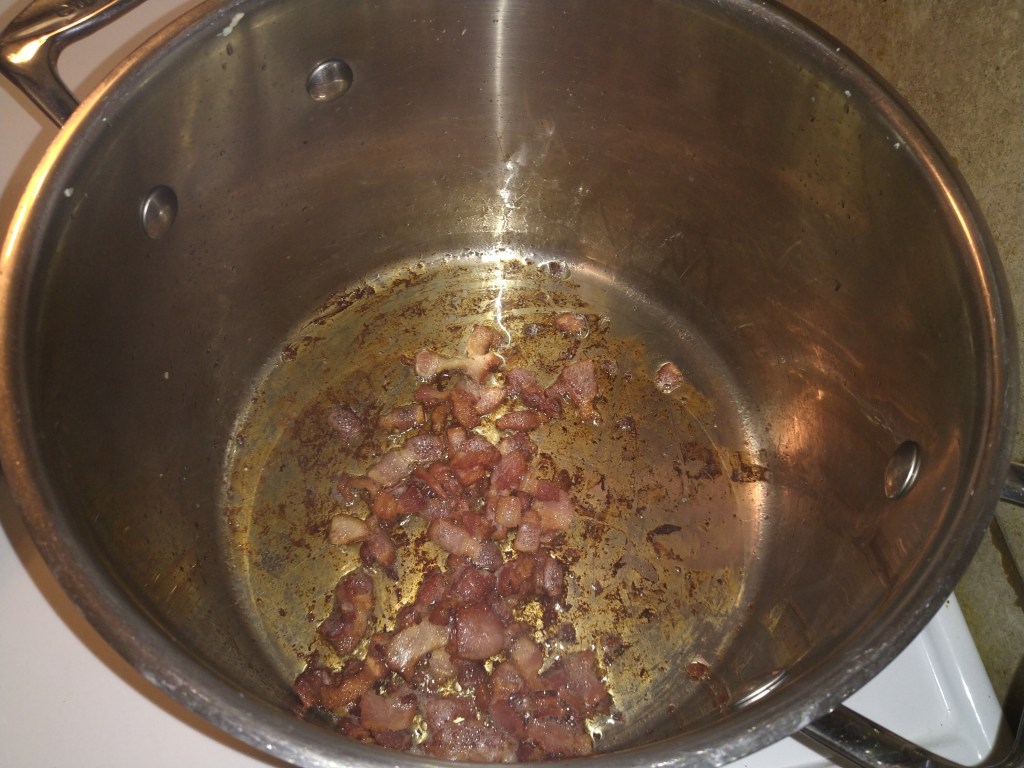
- Remove the bacon and sear pork ribs, Chorizos, and pork shoulder. Season them with salt and pepper.
- Remove the meat and add the onion and garlic and continue to sweat.
- Add chilli, the meat, bay leaves, white wine vinegar, and drained black beans. Cover with cold water then bring to boil.
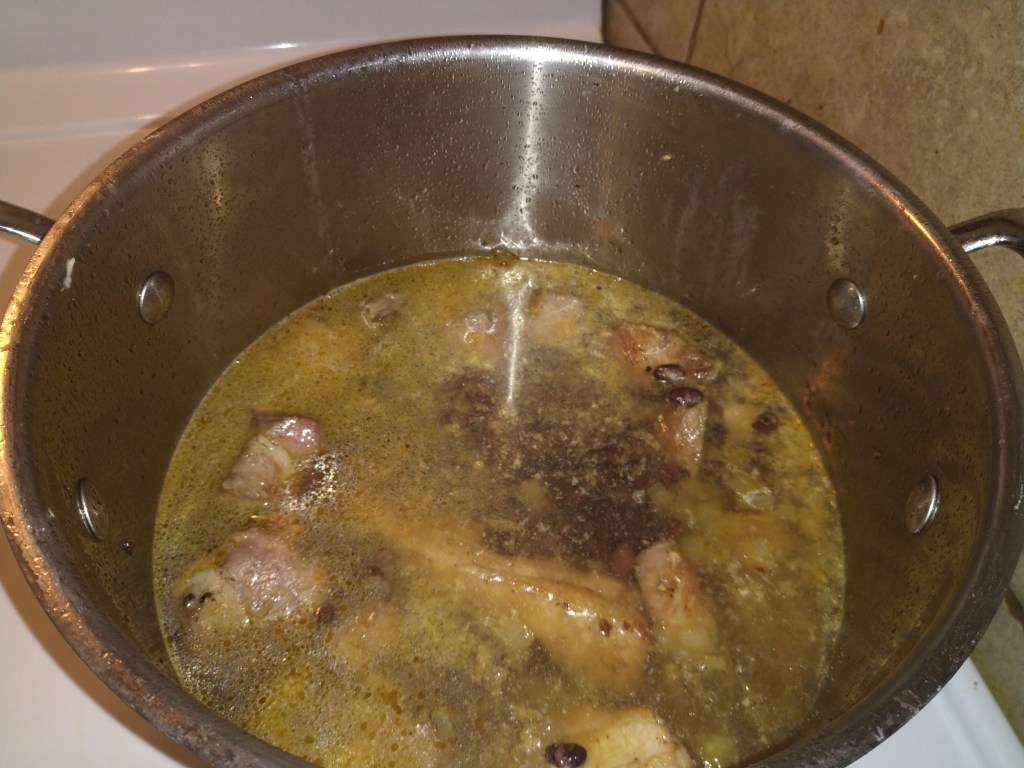
- When it boils, reduce the heat to simmer. Cover and cook for 2 hours.
- Serve with rice and a sprinkle of parsley.
Farofa
Preparation time: 1 hour Servings: 4 servings
Cooking time: 10 minutes
| Quantity | Unit of measure | Ingredient/specification |
| 400 | g | White cassava |
| 2 | tbsp | Butter |
| 100 | g | Onion |
| 2 | cloves | Garlic |
| to taste | Salt and white pepper |
Preparation
- Wash and peel white cassava. Place it into a pot and cover with cold water and bring to a boil over medium heat.
- Reduce to a simmer and cook cassava until tender.
- Strain the cassava and wait until it gets dry then grate it with a grater.
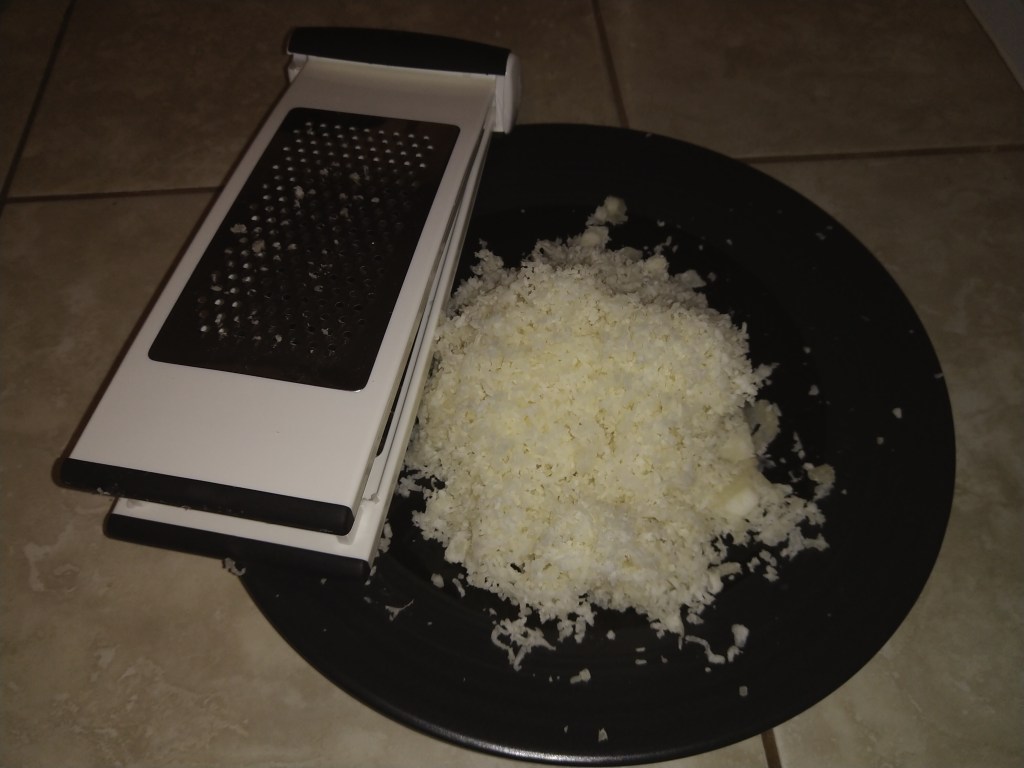
- Heat a pan with butter, onion, and garlic, and sauté until soft.
- Add the cassava, salt, and pepper. Reduce the heat and cook it until golden brown.
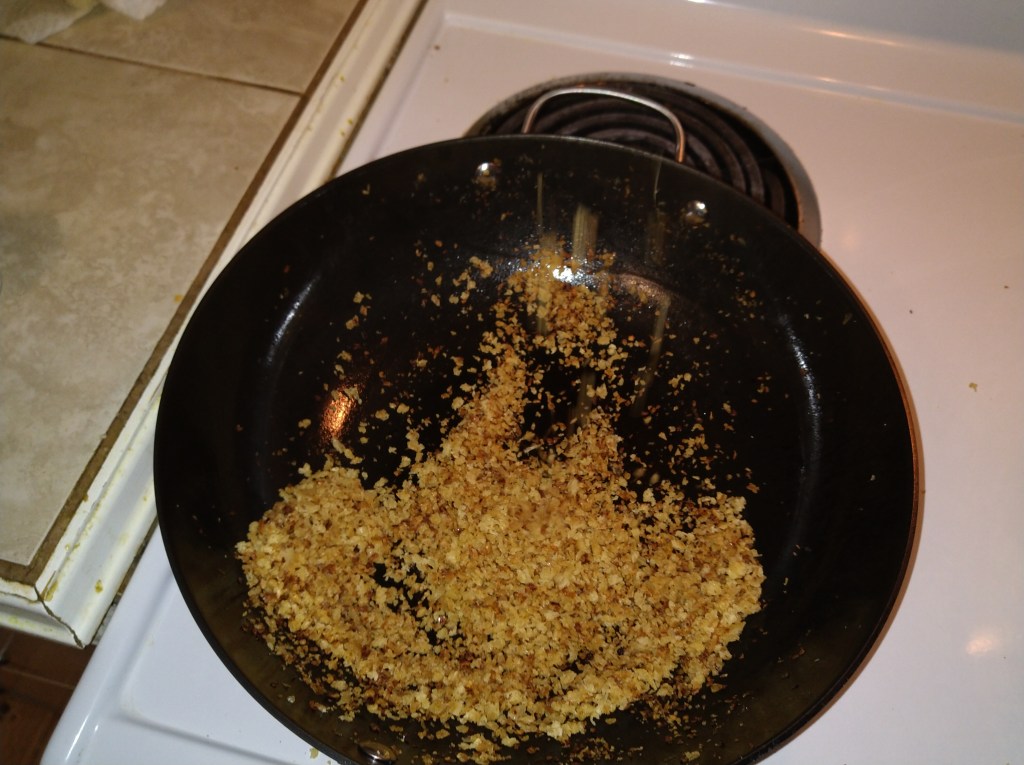
sensory evaluation
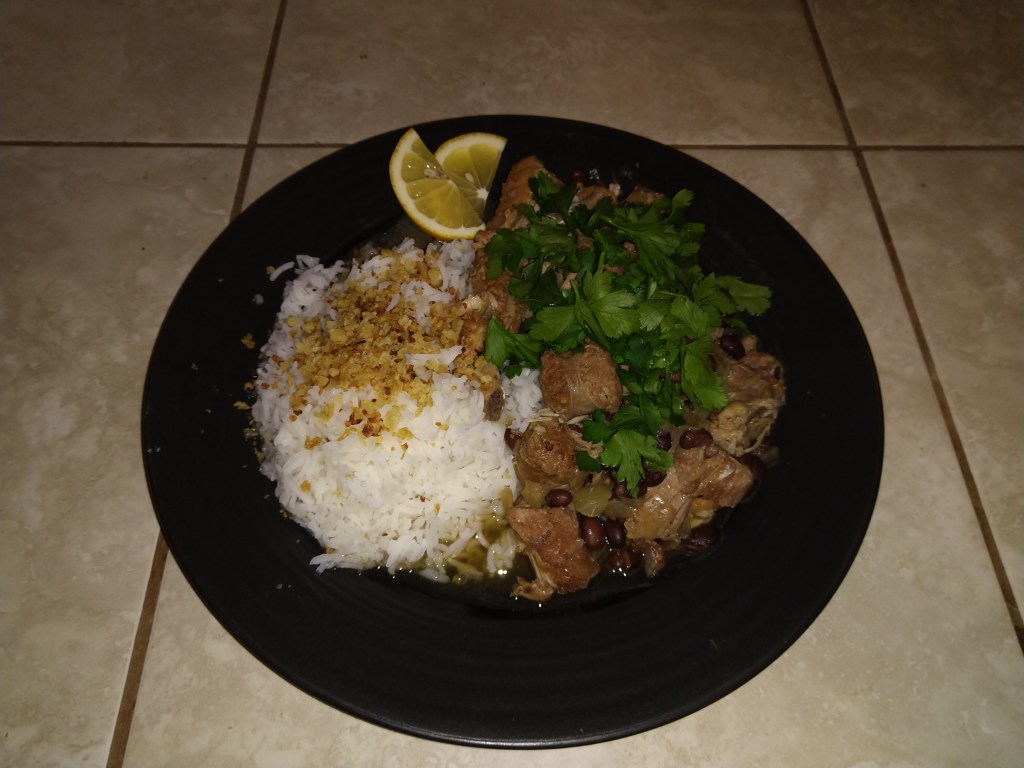
First, feijoada looks dark brown and thick. The aroma has a smoky and spicy chorizo scent. The aroma is a little bit similar as braised navy beans because that dish also uses smoked bacon and beans. The flavour has a couple types of heavy and rich pork taste. There is a little sweetness from fat and beans and a strong umami flavour but it is salty. Nevertheless, the texture very tender. You should eat it with rice or bread. There are no relatable flavour in my opinion but I would describe it as “smoky spicy salty pork stew without tomato”.
Second, Farofa smells like sweet onion and roasted garlic. It is as crunchy as bread crumbs and farofa can make us think about potato croquettes without white potato in it but with very caramelized taste. Cassava probably has a different type of sweetness in this crunchy addictive side dish. Overall, both meals have unique taste especially feijoada for me.
Conclusion
These dishes are totally not familiar to me. I was surprised to put different types of meats in order to cook feijoada. As a result, it has a very rich and smoky taste but it is salty because of some processed meats. I was not sure whether I made it correctly or not so I would like to try it in a Brazilian restaurant next time. As for farofa, I found that it has many possibilities to combine with other dishes such as curry or teriyaki chicken. Cassava is also used for tapioca so I will try to make bubble tea from scratch next time. This experience gives me the opportunity to explore other types of ingredients like black beans or cassava and these flavours are slightly difference from what I usually cook with. It also gives me some ideas to create soup recipes.
Reference
Joyce,J. (2014, June). Immediate Media Company, “Black bean & meat stew – feijoada“. Retrieved from https://www.bbcgoodfood.com/recipes/black-bean-meat-stew-feijoada
Shaw,A. (2017,November 4). BRAZILIAN KITCHEN ABROAD. “FAROFA | TOASTED CASSAVA FLOUR“. Retrieved from https://braziliankitchenabroad.com/farofa/
All pictures are taken by Takashi Ohara
 tak's kitchen