Artichoke, which has a characteristic appearance, is a vegetable that is popular in the West, but it is not so famous in Japan. Also, even if I saw it at the supermarket, I never had it because the price was around $10. Whereas in Canada, you can get it at a reasonable price of just under $2 (under $1 at Asian market!), so I am going to research and cook this curious ingredient.
Artichoke or globe artichoke is a perennial thistle of the Daisy family(Dalebö, 2009). Historians say that this plant originated in the Mediterranean coun- tries, possible Sicily or Tunisia. It was cultivated in the Greek era, at which time it had already been improved into edible vegetables and ate its head and leaves(University of Arizona CALS, n.d.). Most artichokes available in Canada are from California. It’s usually available all year round, but you’ll get better during peak seasons March to June and September to October (ASK THE FOOD GEEK, n.d.). This plant grows to 1.5 to 2 m tall, with arching, deeply lobed, silvery glaucous-green leaves 50 to 80 cm long. The flowers develop in a large head from an edible bud about 8 to 15 cm diameter with numerous triangular scales. The individual florets are purple. The edible portion of the buds consists primarily of the fleshy lower portions of the involucral bracts and the base, or center, known as the “heart;” the mass of immature florets in the center of the bud is called the “choke” (New World Encyclopedia, n.d.). This vegetables can be cooked using almost all method and it fit into French and mediterranean cuisine.
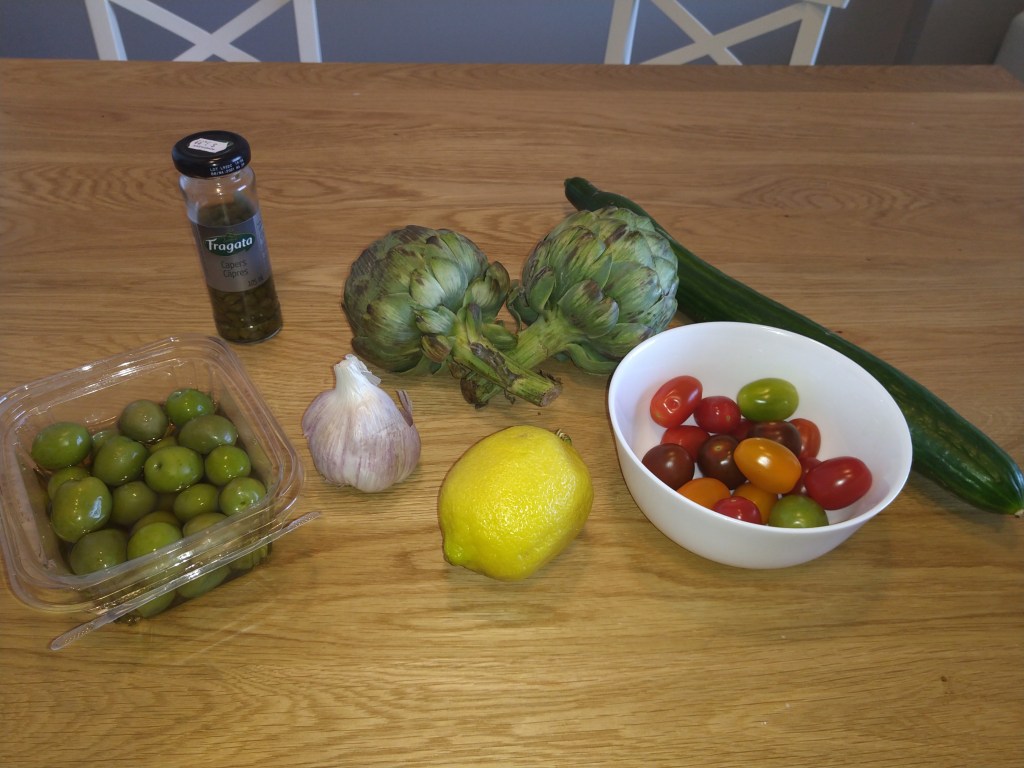
This is the first time I have eaten artichoke, so I chose salad and pasta to know its taste profile. Also,since Vegan has become a trend these days, I have decided not to put animal protein in these dished.
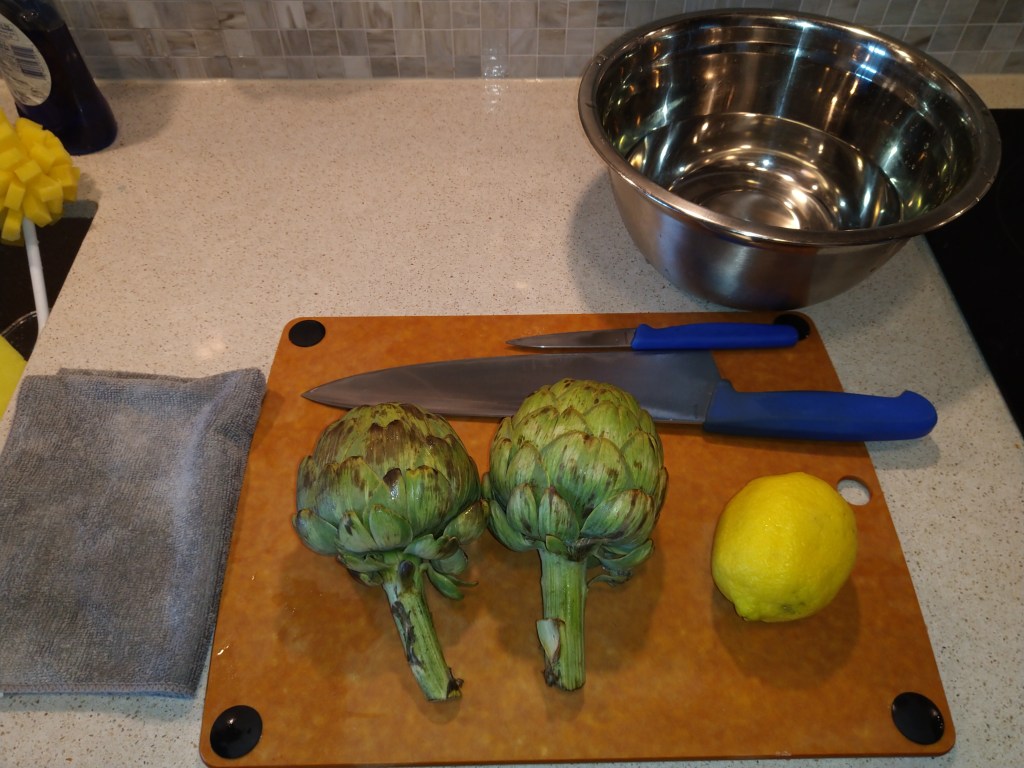
Before start to cook, you need to prepare artichoke. Cut a lemon into quarters and squeeze the juice into the bowl of water. Remove the tough outer leaves until you reach the yellowish green colour.
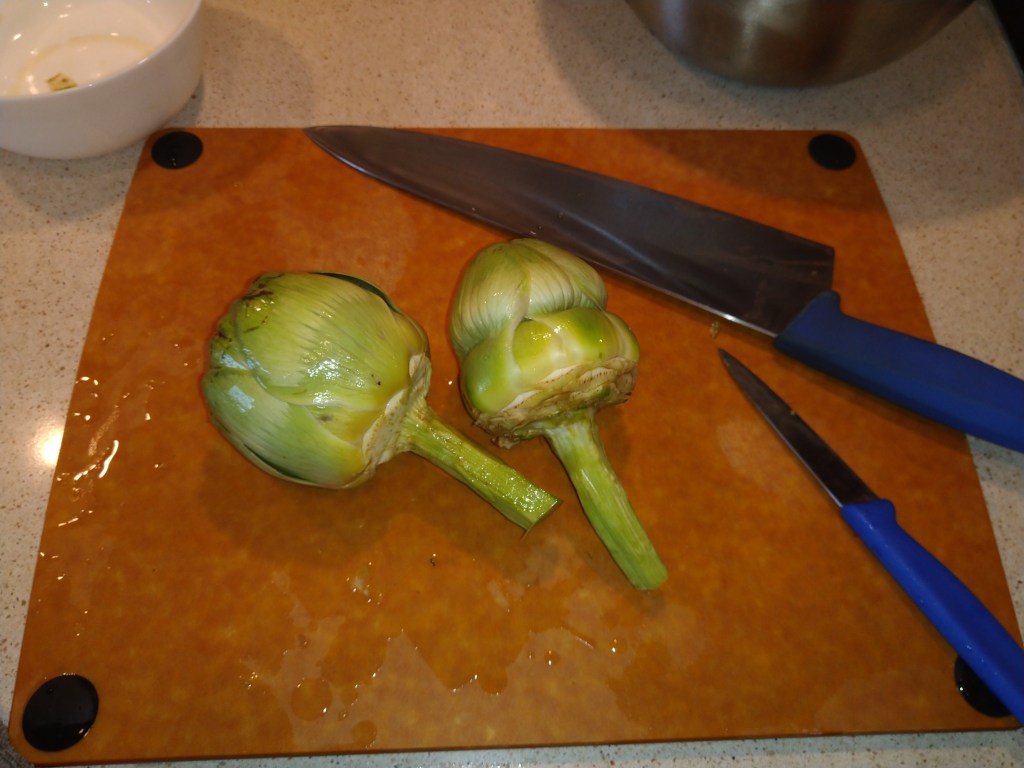
Use a paring knife to trim off the hard part of the stem and the outer skin around the base of the artichoke.
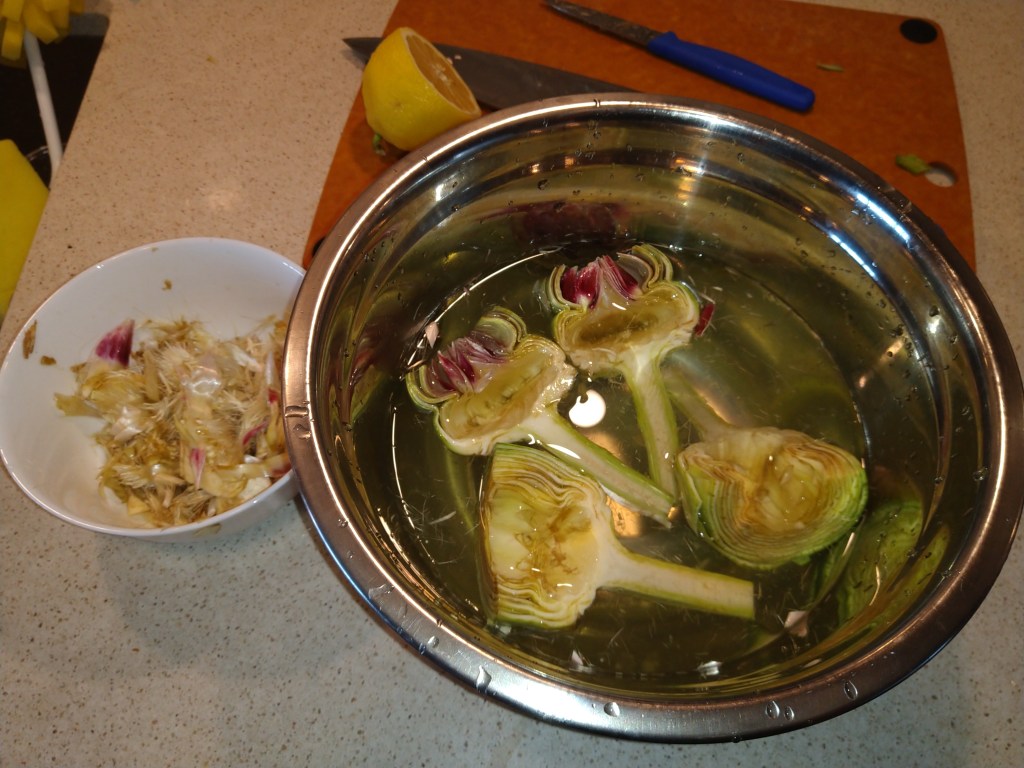
Cut off the top inch of it and rub the lemon juice to stop the oxidation process which will turn the artichoke brown. Cut lengthwise and scoop out all of the hairy bits using a spoon, then submerge into the bowl.
ARTICHOKE SALAD
| Quantity | Unit of measure | Ingredient/specification |
| 1 | ea. | Artichoke |
| 4 | pc | Grape tomatoes, cut into half |
| 5 | g | Caper, finely chopped |
| 60 | g | English Cucumber, medium dice |
| 2 | pc | Castelvetrano Olives, finely chopped |
| 10 | ml | Olive Oil |
| 10 | ml | White Wine Vinegar |
| 4 | ml | Lemon juice |
| To taste | Salt | |
| To taste | Ground Black Pepper |
1.Drain the treated artichokes and slice.
2.Add the chopped artichoke and the rest of the ingredients to a bowl and mix well.
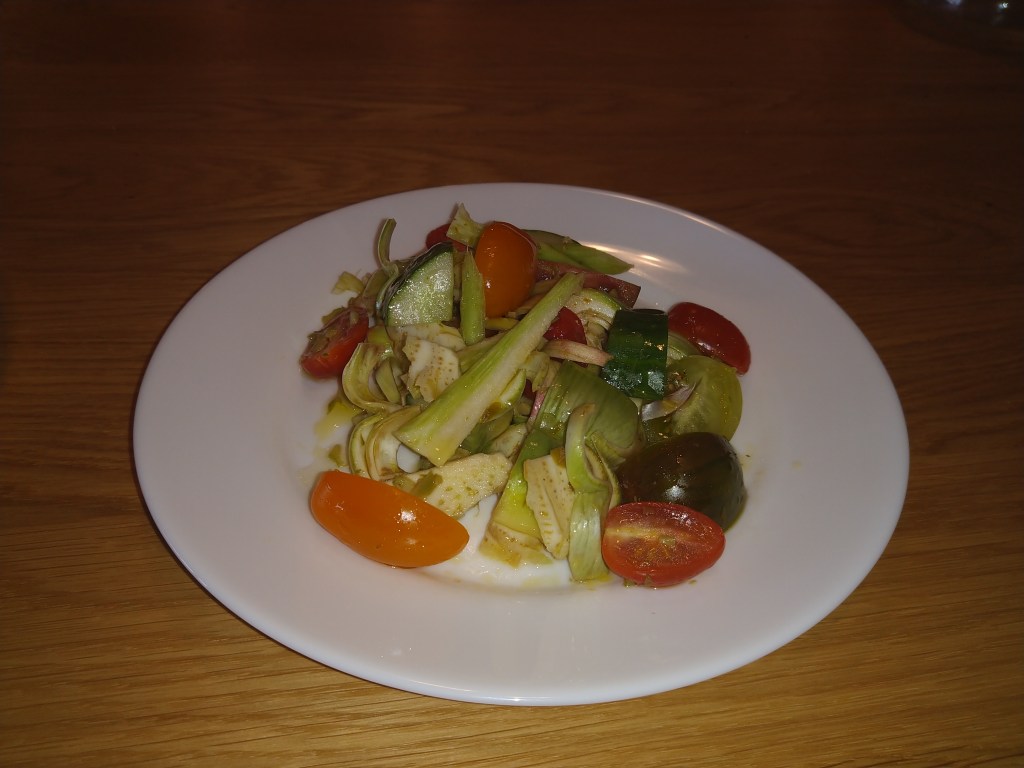
TAGLIATELLE WITH ARTICHOKE
| Quantity | Unit of measure | Ingredient/specification |
| 50 | ml | Water |
| 100 | g | Durum Semolina |
| 5 | ml | Olive oil |
| For dusting | All- purpose flour | |
| To taste | Salt | |
| 1 | ea. | Artichoke |
| 1 | Clove | Garlic |
| 1/4 | pc | Chilli Pepper |
| 10 | g | Broccoli Sprouts |
| 30 | ml | Olive oil |
| 15 | ml | White Wine |
| To taste | Salt | |
| To taste | Ground Black Pepper |
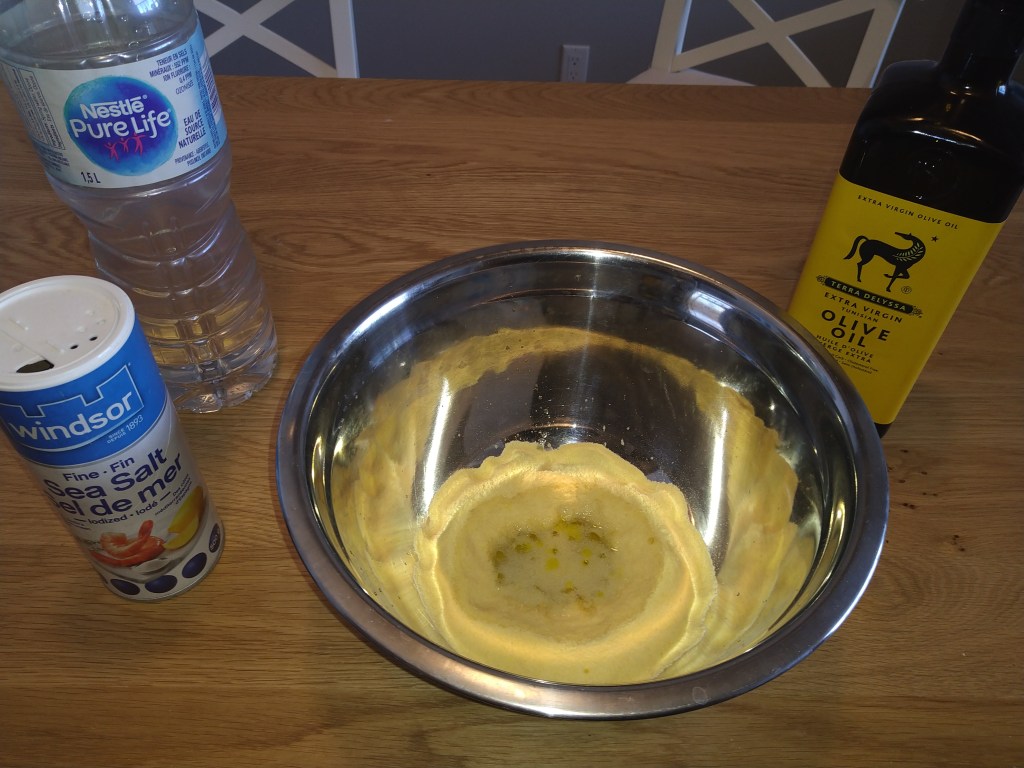
In a bowl, sift semolina and make a well in the center. Place water, olive oil and salt into the flour well. Gradually mix the flour into the water to make dough, knead until the dough is smooth to the touch. Wrap in plastic wrap and rest for half a day in a fridge.
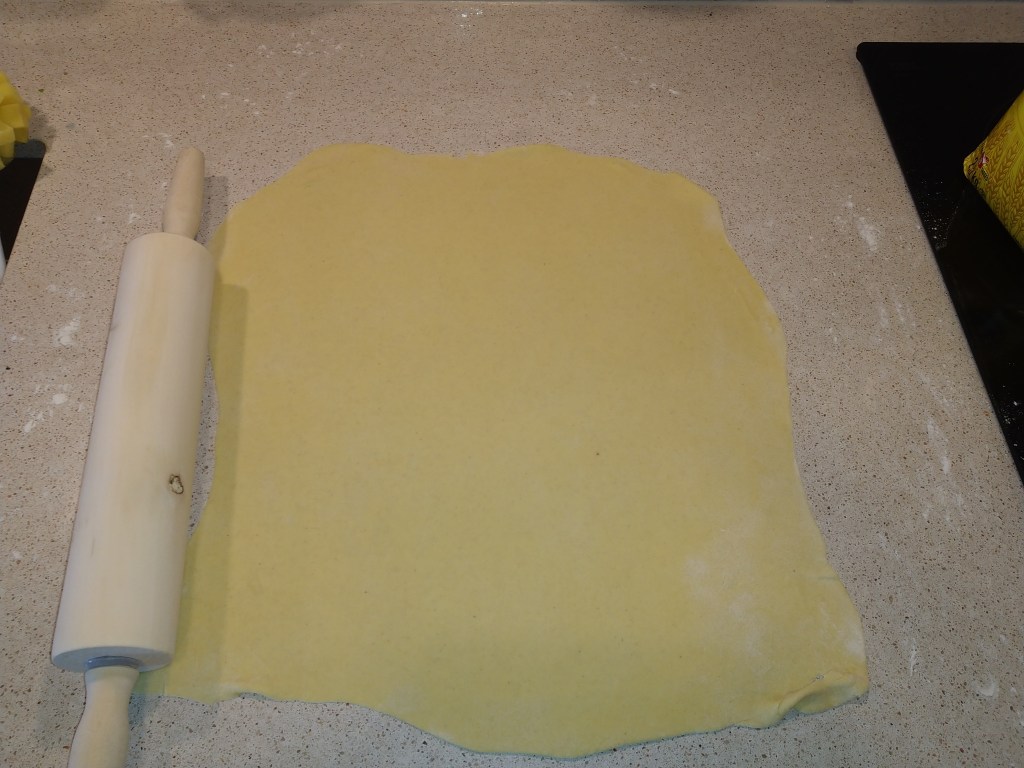
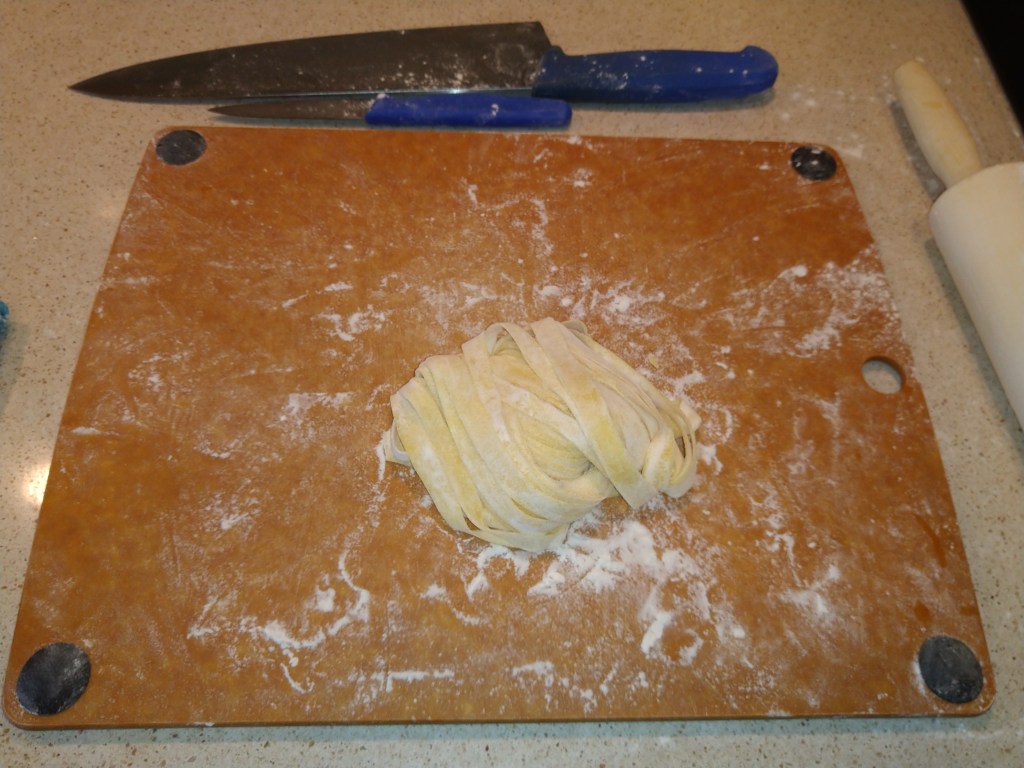
Sprinkle the stand generously with all-purpose flour and roll the pasta dough until it reaches 1 to 2mm thickness. sprinkle the flour on the pasta sheet and roll it. Cut the the sheet 8mm wide strips.
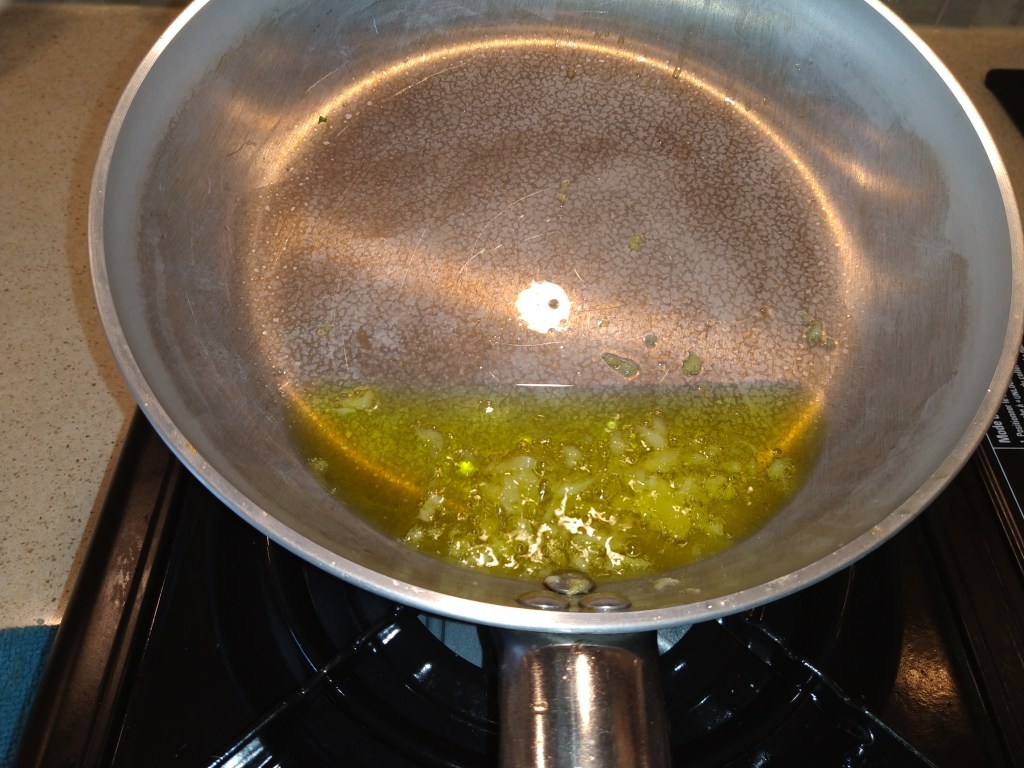
Put olive oil in a frying pan and add crushed garlic.Crush the garlic on the back of the fork in small pieces, add the chopped artichoke and chilli pepper and Sauté.
Add white wine and simmer it to allow the alcohol to evaporate.Cook pasta in boiling salted water for 30 seconds Add pasta cooking water and salt, then add boiled pasta and quickly mix with sauce. Season black pepper.
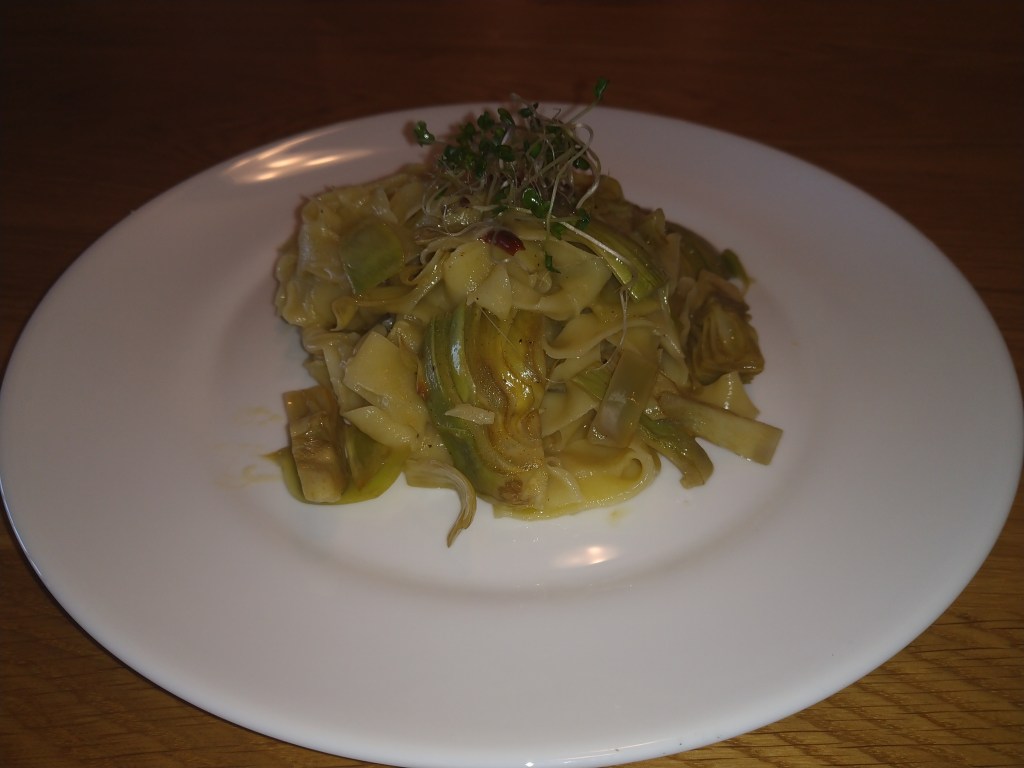
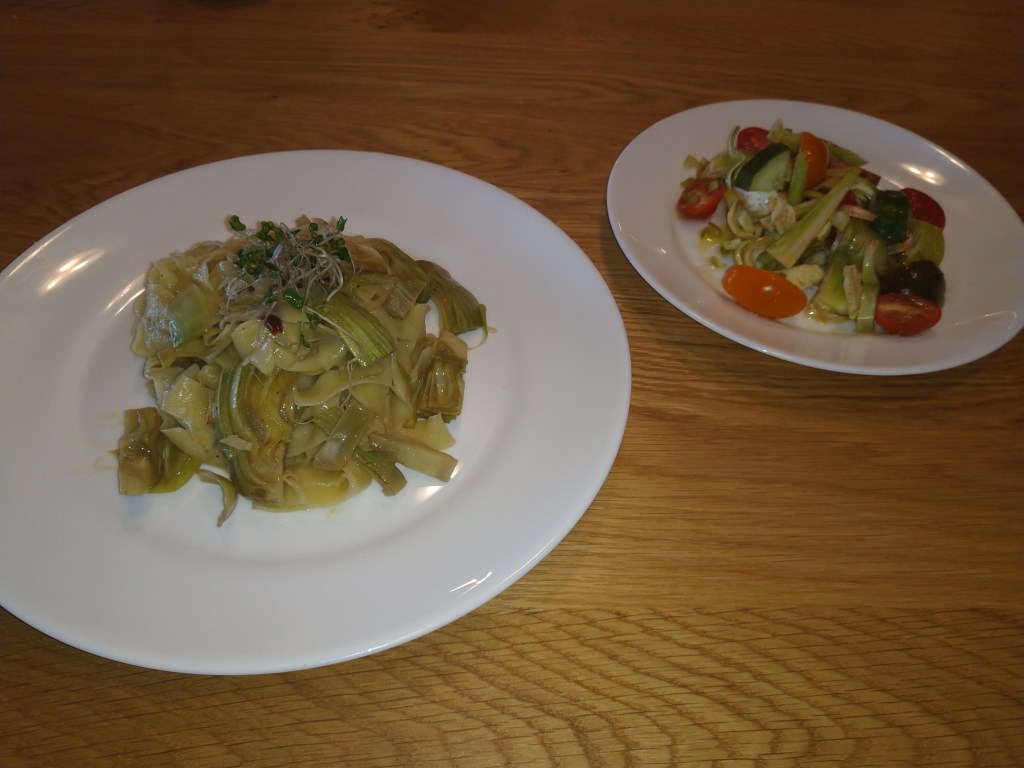
It had a unique grassy scent, the leaves were very fibrous and the only edible part was the root. The heart part had a slightly mellow bitterness in addition to the texture and sweetness of broad bean. In addition, I felt dull the tip of the tongue during the meal, and the whole dish felt a little sweet. This is because cinnaline contained in art choke inhibits taste receptors. Overall, It’s a time-consuming ingredient to eat, but when you try it, you will be engrossed in it.
References
ASK THE FOOD GEEK.(n.d.). “Artichokes“. Retrieved from https://askthefoodgeek.com/artichokes/
Dalebö, T. (2009). “How to grow Globe Artichoke“. Retrieved from https://sites.google.com/site/knowyourvegetables/know-your-globe-artichokes/growing-globe-artichokes
New World Encyclopedia. ‘(n.d.). “Artichoke” Retrieved from https://www.newworldencyclopedia.org/entry/Artichoke
University of Arizona CALS. (n.d.). “Artichoke“. Retrieved from https://cals.arizona.edu/fps/sites/cals.arizona.edu.fps/files/cotw/artichoke.pdf
 tak's kitchen