The food has become diversified and more abundant thank to globalization. However, in today’s diet, it is common to skip breakfast, to take insufficient intake of vegetables and fruits, and too much salt. In addition, there are more obese people, some women are too lean, and undernutrition of elderly people is observed. It is also believed that an increase food allergies occurs because of some food behaviours.Therefore, since I am studying culinary management, I think it is important to provide a healthy and enjoyable meal.As there are various diets, I chose pescatarian one because it has less regulations than other diets. Also, this time I will cook assuming that I have a nut allergy.
Pescatarian diet is similar to Vegetarian one, but it is possible to take fish, seafood, dairy, and eggs. It is largely a plant based diet with whole grains, nuts, legumes and healthy fats such as olive oil (Ann, 2017). It goes well with Japanese cuisine because in Japan, the traditional diet mainly consisted of fish and vegetables. So, I adhered to this diet for a week and I am leaving a recipe and pictures of what I ate on this blog.
Eggplant Mizore-ni
| Quantity | Unit of measure | Ingredient/specification |
| 150 | g | Eggplant, 3cm dice |
| 100 | ml | Dashi |
| 10 | ml | Soy Sauce |
| 10 | ml | Mirin |
| 70 | g | Daikon, grated |
| To taste | Salt | |
| 5 | g | Ginger, grated |
| 10 | g | Scallion, thinly sliced |
| To deep fry | Vegetable oil |
- Cut eggplant into 3cm dice and soak in water. Preheat oil to 365°F (180°C) and boil the water in a pot in order to rinse.
- Dry the eggplant with paper towels and deep fry for 2 to 3 minutes.
- Rinse the fried eggplant with hot water to remove excess oil.
- Add dashi, and mirin in a sauce pot and bring to a simmer. Then, add soy sauce, salt, and grated daikon.
- Add the eggplant in the sauce pot and simmer for few seconds. Serve on a dish with sliced scallion and grated ginger.
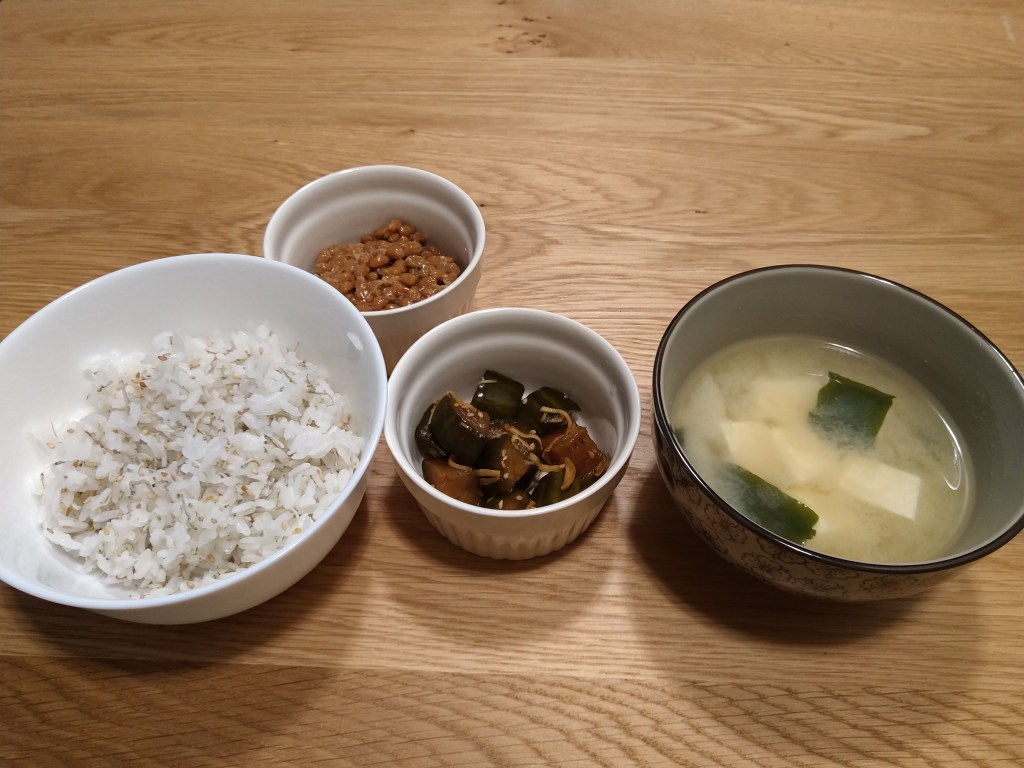
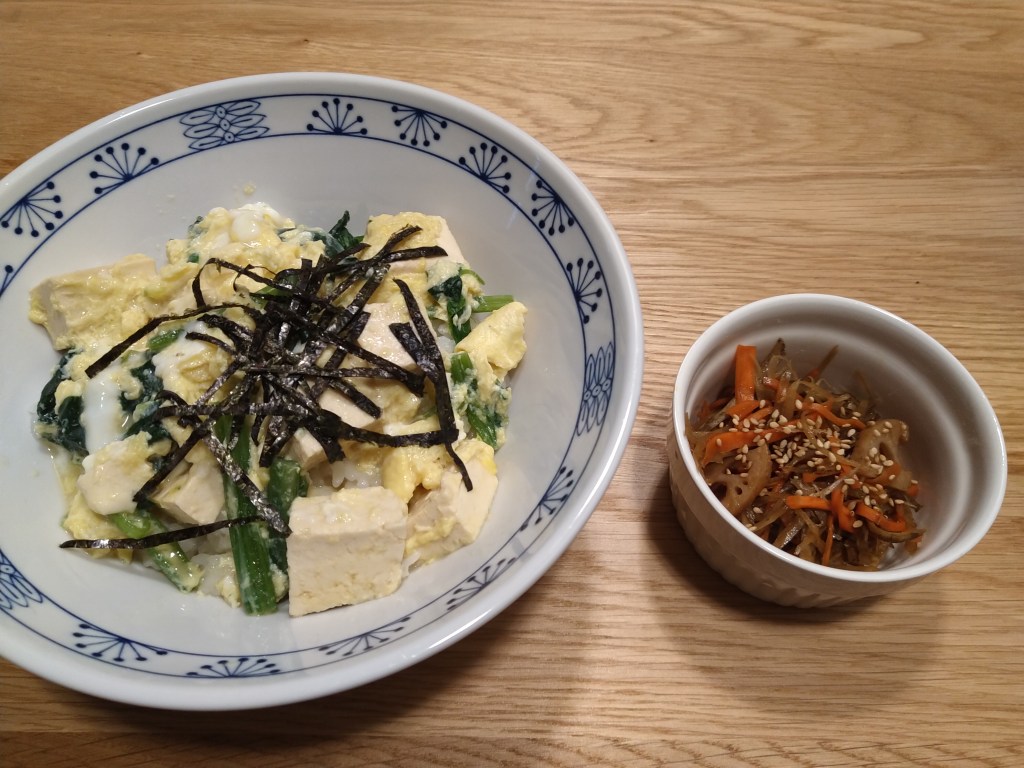
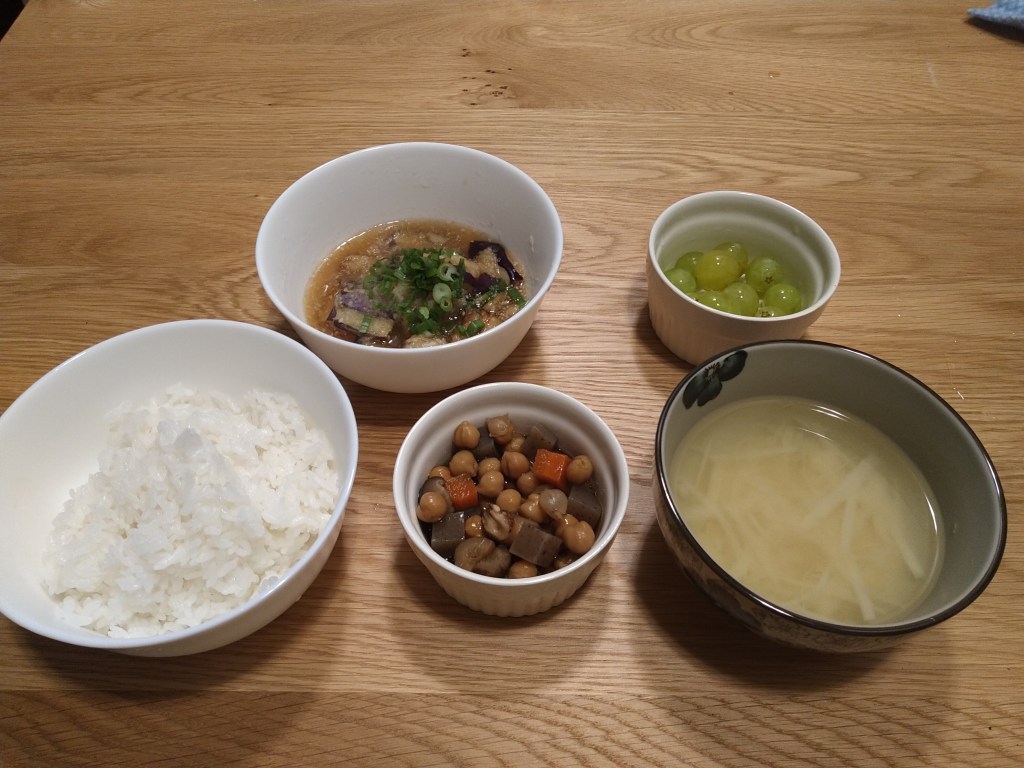
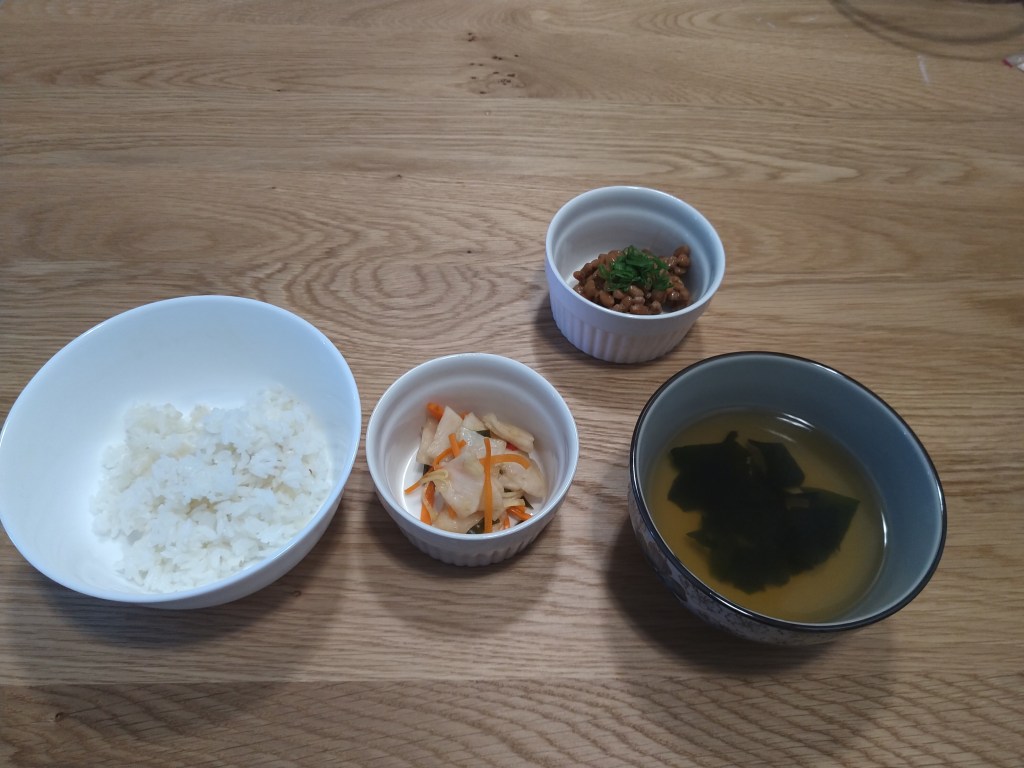
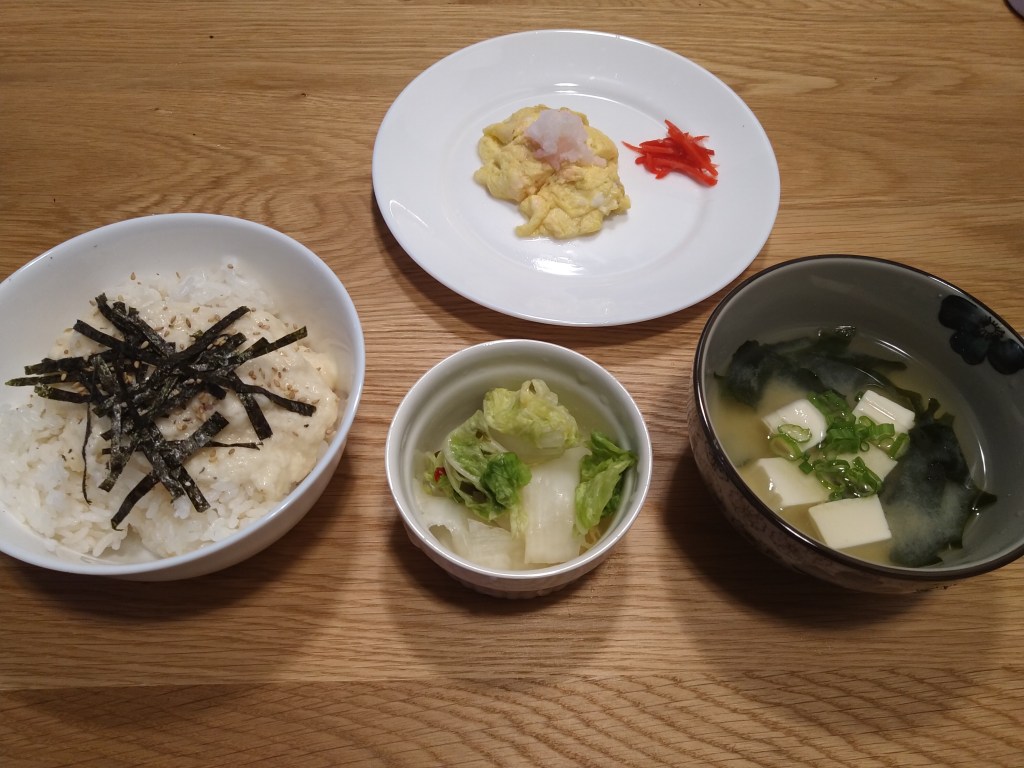
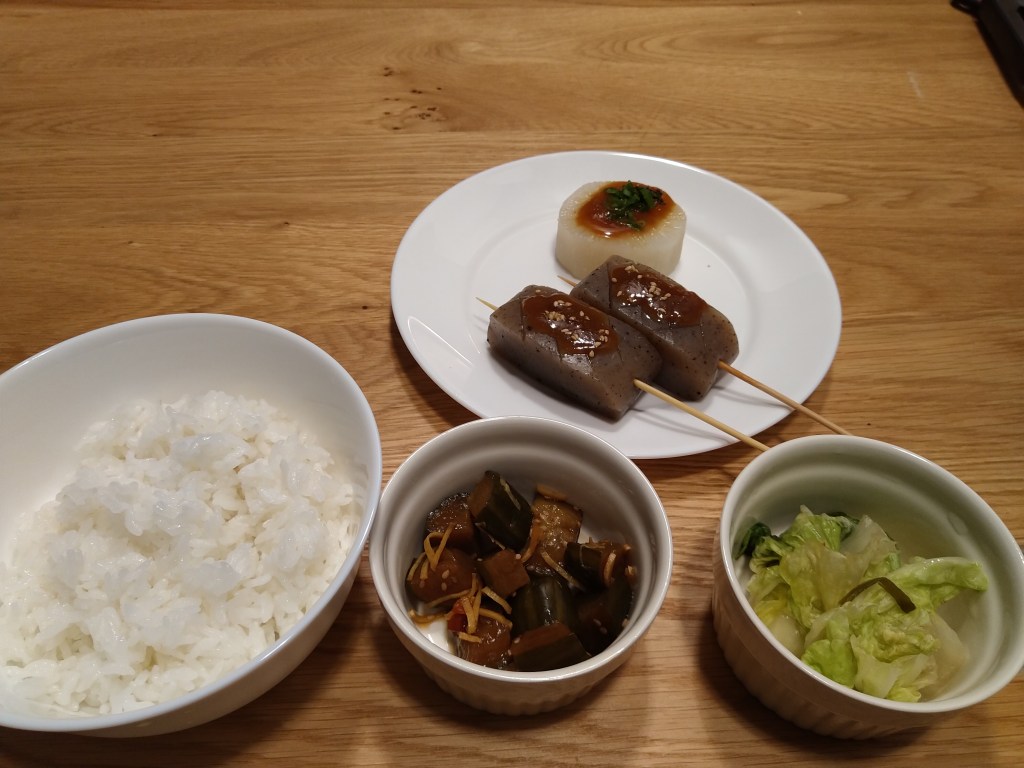
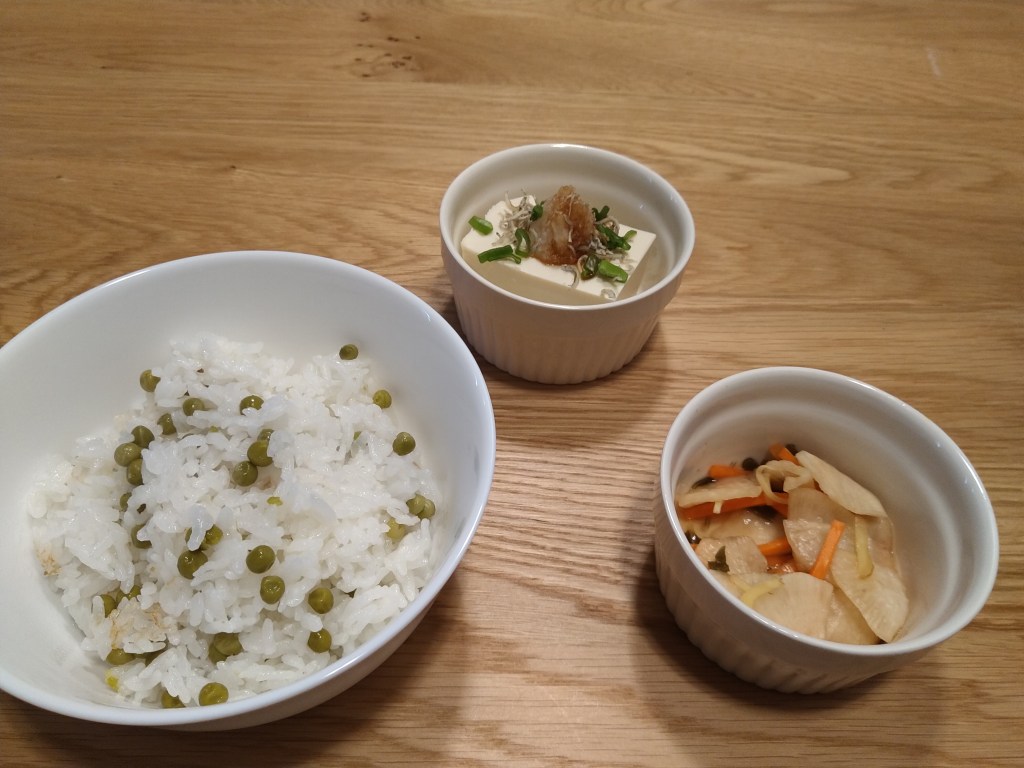
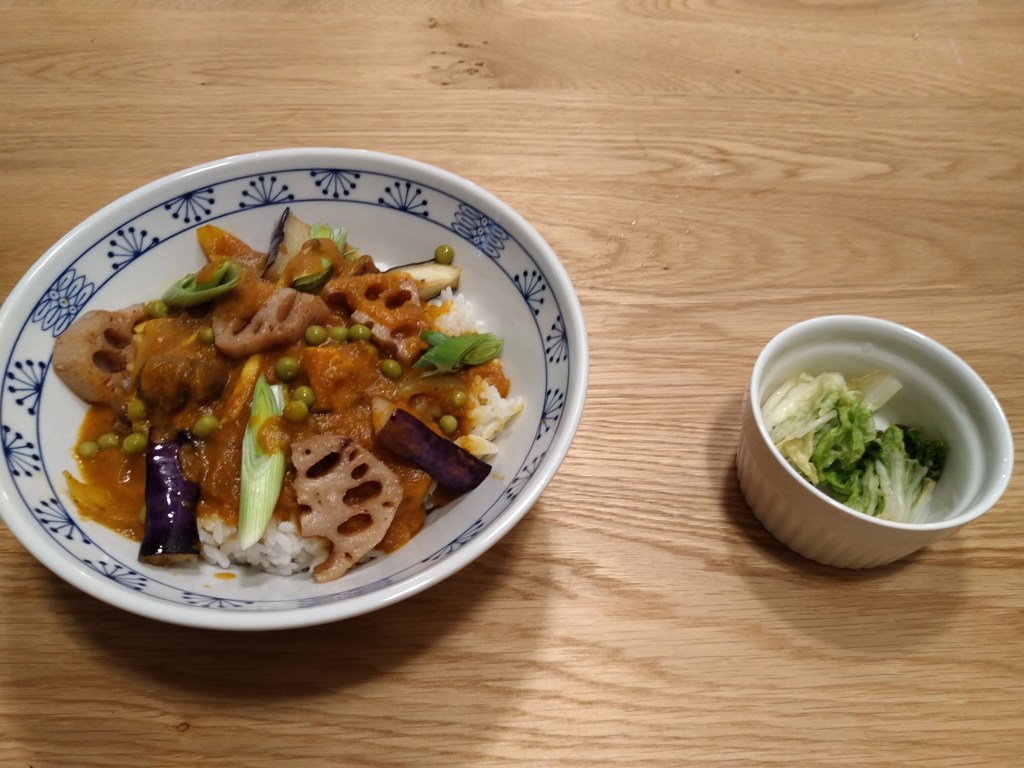
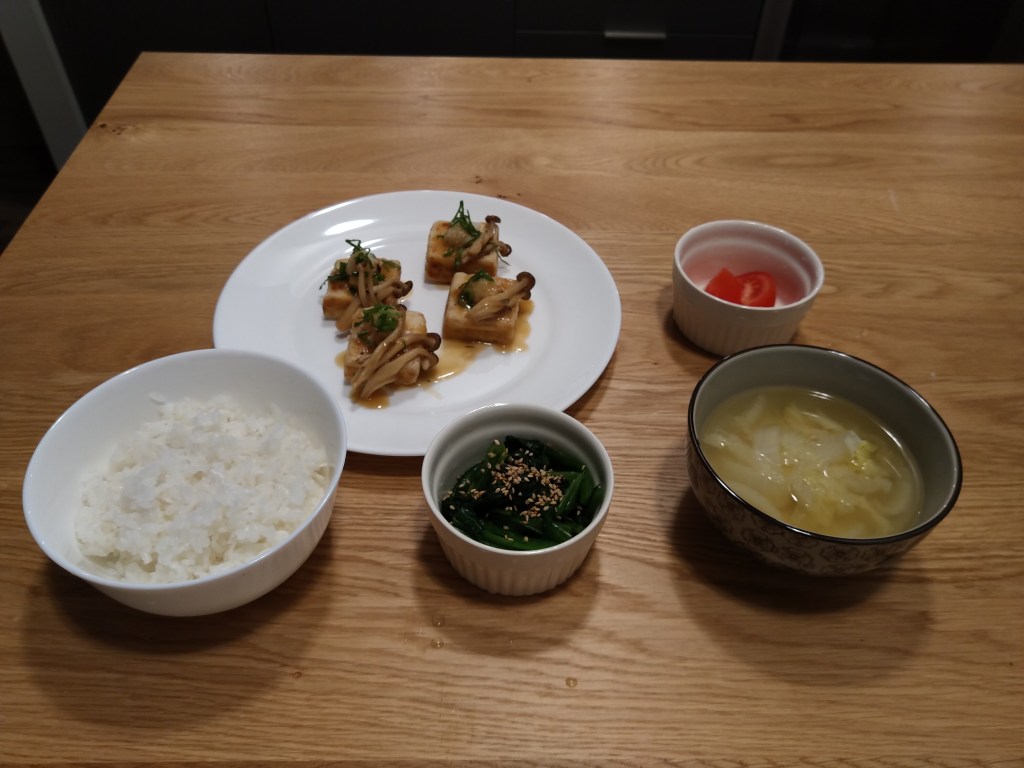
What I noticed after carrying out this diet was that I used less oil. Since Japanese food has many simmered dishes, it does not need to use oil. Also, traditional dishes do not contain nuts, so there was no need to think of a substitute. Another thing I noticed is that I took less carbohydrate than usual. It seems that the appetite was suppressed because the seasoning was simple and I didn’t feel hungry between meals.
The important thing to keep in mind on this diet is to refrain from eating large fish such as fresh tuna and king mackerel. These fish can accumulate harmful effects on the body as they may contain mercury and other bad substances (Brown, 2018). Also, since the prices of fish in Toronto are not cheap, it can be difficult to continue to eat fish like in the traditional Japanese diet. This diet brings new discoveries to me and I think it is good for my health, but I don’t follow it completely because of the high cost of fish and the desire to eat meat.
References
Ann,K. (2017, March 10). “What Is a Pescatarian and What Do They Eat?“. Retrieved from https://www.healthline.com/nutrition/pescatarian-diet
Brown, M.(2018, September 14). “Should You Avoid Fish Because of Mercury?”. Retrieved from https://www.healthline.com/nutrition/mercury-content-of-fish#fish-concentrations
 tak's kitchen